A Tunisian transport tech startup with a working product, a real market need, and no communication infrastructure to make either of them visible to the people who mattered.
The Situation
A solid product with no language to speak about itself
Bus Software had built Winicari — a smart bus management system designed to modernise public and private transport operations in Tunisia and across Africa. The product is a full stack: an onboard ticketing machine, a web platform, and a mobile app, all connected to a local database. Fare collection, geolocation, WiFi sharing, sound systems, destination board management. The stated objective: a 0% delay rate, achieved through better data and operational discipline.
The product worked. The startup had engineering depth, sector knowledge, and a clear market gap. What it did not have was the communication infrastructure to make any of that legible — to investors, to competition juries, to institutional partners, or to municipal operators evaluating procurement options.
Bus Software had been heads-down building. The brand had not kept pace with the product. The team had lost the source file of their own logo. There was no graphic charter, no structured pitch, no communication dossier. The AFD Digital Challenge 2020 — a major international competition in the Ville Durable category — was approaching. The product was ready. The presentation of the product was not.
The Diagnosis
The product was built, the commercial narrative had never been architected
The gap was not design. It was not content. It was the absence of a structured commercial narrative: the layer between what a startup builds and what the outside world understands about what it builds.
Bus Software could explain Winicari to an engineer. It could not explain Winicari to a competition jury, an investor panel, or a municipal transport director. All of whom evaluate differently, listen for different signals, and make decisions on different timelines. The startup had one product and needed to communicate it to four distinct audiences. No version of that communication existed.
The communication infrastructure behind a top-10 African startup.
Solando delivered six coordinated outputs. Each one addressing a specific gap between the product and the startup’s ability to communicate it.
Business Development Support
Solando structured and wrote Bus Software’s complete communication kit: company presentation, pitch deck, and investor-ready speeches. Not templates. Custom materials built around Winicari’s specific value proposition, competitive positioning in the Tunisian smart mobility market, and the distinct expectations of each target audience: competition juries, institutional partners, and transport operators.
AFD Digital Challenge Dossier
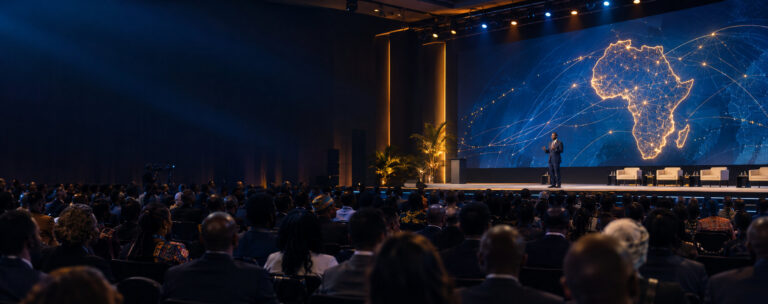
Solando supported preparation of the Bus Software application to the AFD Digital Challenge 2020, one of the most competitive international startup competitions in the sustainable city category. The dossier was built to meet the specific evaluation criteria. Bus Software was selected as a laureate in the Ville Durable category, named among the top 10 African startups of 2020, and received up to €20,000 in financial support with personalised accompaniment.
Workshops: Public Speaking, Soft Skills, Business Development
Solando delivered structured training sessions to the Bus Software team. Public speaking technique for investor and competition settings. Soft skills for stakeholder meetings. Business development methodology for structuring sales conversations with institutional clients. This was capability building, not a one-time presentation rehearsal.
Logo Reconstruction
Bus Software had lost the source file of their own logo — a small detail that reveals a common startup pattern: all energy on the product, none on the brand infrastructure. Solando reconstructed the logo from available materials, applying minimal targeted modifications to strengthen the visual identity. The source files now exist
Graphic Charter
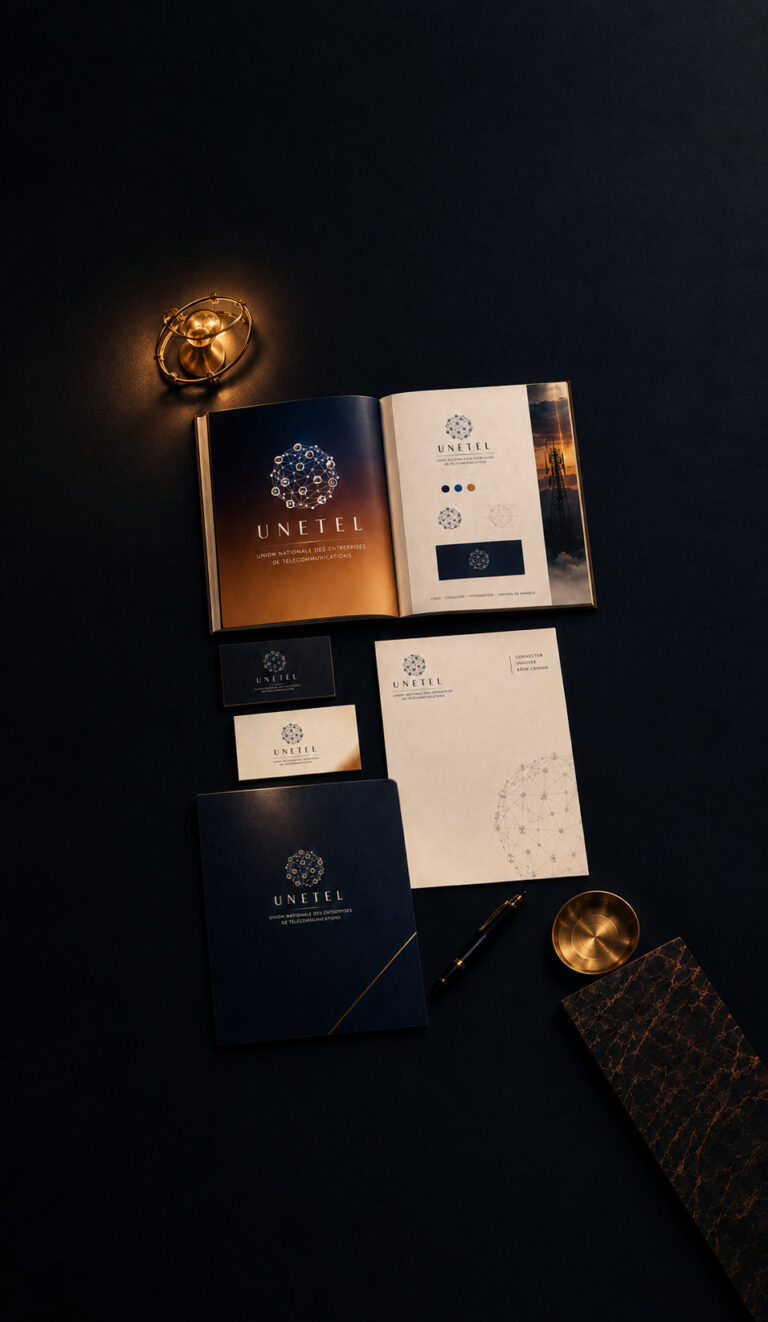
Solando designed a complete graphic charter for Bus Software from scratch. Typography, colour system, usage rules, and application guidelines — the structural foundation that every subsequent communication asset was built from.
Communication Assets
All print and digital communication supports designed and produced by Solando. Each asset built on the graphic charter, consistent with the commercial narrative, and ready for use across competition submissions, investor meetings, and partner presentations.
From invisible product to competition-winning startup
Bus Software was selected as a laureate of the AFD Digital Challenge 2020, in the Ville Durable (Sustainable City) category — a direct result of the prepared dossier and pitch materials.
Bus Software was named among the top 10 African startups of 2020 and received up to €20,000 in financial support alongside personalised accompaniment from the AFD programme.
The startup moved from having no structured brand identity to having a complete graphic charter, reconstructed logo with source files, and a full set of communication assets ready for any audience.
Winicari — the smart bus management system — had a commercial narrative for the first time. One product, multiple audience-specific presentations, all structurally consistent.
Verified performance numbers will be added once confirmed with the client.
Startups do not fail because their products are weak. They fail because they cannot communicate what their products do to the people who fund, buy, and regulate them.
Bus Software had a working smart mobility product. It had no commercial narrative, no visual identity system, no pitch infrastructure, and no trained ability to present in high-stakes settings. Solando built every layer of that communication architecture — and the first test was an international competition. Bus Software won.
For any startup founder, innovation director, or accelerator manager evaluating a branding partner: this is what the work looks like when a startup needs more than a logo. It needs to become legible.